


Nov 24, 2025
How the Middle Warehouse Ensures Quick Delivery to Poland
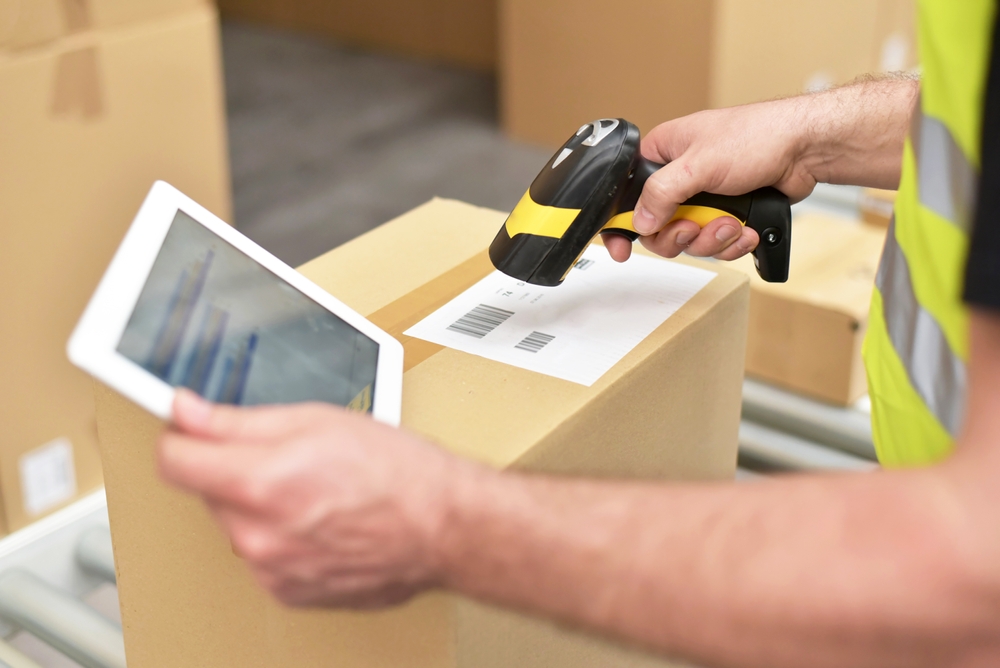
U.S. online shops are reaching more buyers in Europe every year thanks to quick delivery to Poland and other countries.
Shipping small orders across the Atlantic costs a small fortune; for instance, sending a single box of sneakers to Paris simply doesn’t add up. High fuel prices and piling customs fees drive up shipping, turning the handling of each individual parcel into a money-losing headache.
There’s a solution called middle-warehouse consolidated shipping. With this system, packages from many small stores get packed together, allowing them all to travel as one large shipment instead of requiring payment over and over for each individual box.
You can think of it as carpooling, but for packages, which dramatically slashes costs for everyone involved. Once orders land together in Europe and are ready for local delivery, buyers don't wait as long for their items, and retailers can actually start making money.
The warehouse is where the real logistics happens. Orders are checked in, sorted, and grouped for their journey overseas, where labels get printed and all customs paperwork gets efficiently sorted. As containers head out to Germany, France, the United Kingdom or Poland, each entire shipment clears the border with everything in order.
Getting this process right means faster delivery for shoppers and fairer prices, allowing businesses to keep growing without constantly worrying about shipping barriers. It may sound like plain logistics, but it’s the crucial bridge connecting sellers in the United States to their buyers across Europe.
Quick Delivery to Poland and Overcoming LCL Inefficiency
While big companies built transatlantic shipping specifically for huge business-to-business (B2B) loads, online shopping and quick delivery to Poland suddenly exploded with tiny orders headed to people’s homes. Hundreds of boxes from every imaginable store, all needing space on the same ships.
Shipping small loads by themselves costs a fortune, as you still pay for the handling, extra paperwork, and space even if your shipment barely fills a corner. Less than Container Load (LCL) shipping often means extra steps, leading to more stops and a higher chance for something to go wrong.
A middle warehouse changes everything. Imagine a giant sorting hub located right between the United States and Europe, a place designed to gather smaller shipments. Once enough goods are headed to places like Northern Europe, they pack it all together into one big, weekly container.
This approach saves real money; in fact, studies show companies are slashing costs up to half just by pulling small shipments together. This efficiency means that suddenly, shipping overseas makes sense for small businesses, while large firms simultaneously get more profit from every shipment. It’s one of those rare win-win moves reshaping global trade right now.
Receiving the Digital and Physical
Quick delivery to Poland starts well before any shipment reaches the dock in America. Pulling orders from different vendors means syncing up shipments heading to several places, requiring close coordination on the tech side.
The warehouse’s system takes over as soon as new orders roll in straight from the online store, packing in details like destination, contents, weight, and size, which the software then instantly sorts into groups based on common characteristics.
- Final Destination Region: all orders going to the United Kingdom, or all to the Benelux region.
- Shipping Method: expedited versus standard.
- Compatibility: separating hazardous materials or temperature-sensitive goods from general merchandise.
Orders get sorted digitally while still on the move from the U.S. supplier, even before they reach the consolidation warehouse. Once LCL shipments show up at the middle warehouse, staff scan them to ensure the captured data matches what actually arrived.
Timing matters a lot here, as dock-to-stock cycle time tracks how long it takes from item arrival to inventory entry. Fast facilities lean on conveyor belts and scanners to move things quickly, since any slowdown could push back the full container shipment, thereby keeping everything on track.
“Distributors are increasingly turning to WMS (warehouse management system) applications to find the cheapest shipping rates or fastest delivery options for rush orders, by identifying opportunities to consolidate shipments or reduce travel distances,” according to Supply Chain Brain. “By equipping carriers, couriers and drivers with end-to-end tracking and management capabilities, they can flush out wasteful mileage and improve the overall efficiency of the supply chain.”
Sorting, Grouping, Optimization, and Quick Delivery to Poland
At any of these warehouses optimized for quick delivery to Poland, single parcels get grouped into one smartly-packed container ready for the next journey. Instead of storing products for ages, this place moves orders out fast, and deliveries hit the dock, move into staging lanes, then quickly find a spot with their matching outbound full containers.
Inside, machines and workers sort each order before you can blink, pushing them down the right path so nothing ends up in the wrong spot. This setup effectively turns the whole building into a kind of giant sorting machine.
Getting everything to fit inside a 40-foot container takes real skill; imagine squeezing odd-shaped boxes and heavy items together, like trying to finish a jigsaw puzzle with different pieces. The main challenge is making every inch count.
Many facilities now use artificial intelligence and machine learning tied to warehouse software, which scans the packages, figures out their best fit, and maps out exactly where every box should go. This planning keeps fragile gear safe and stops cargo from shifting, ensuring every package has its place and nothing gets left behind:
- Maximum Density: Achieving the highest possible unit count per container.
- Structural Stability: Placing heavier items at the bottom and distributing weight evenly.
- Deconsolidation Efficiency: Grouping orders by their final European destination or final delivery partner to simplify the breakdown process at the destination.
Packing a container correctly can slash shipping costs by up to 20-30 percent, while poor stacking risks damage and wastes valuable space. Prioritizing careful packing is essential for ensuring both financial savings and the safer transit of goods.
“One of the key aims of load consolidation is to reduce transportation costs for each order,” states Qodenext. “By combining multiple customers’ orders into a single shipment, the delivery expenses can be shared, allowing for full truckloads to be dispatched. This cost reduction is particularly beneficial for organizations with e-commerce channels, where customers often expect free or low-cost shipping.”
The article adds: “With the growing prevalence of e-commerce and B2C channels, consolidation warehouses have become increasingly popular, especially in B2B sectors. By automating these critical areas, businesses can achieve greater speed, accuracy, and cost-effectiveness in their logistics operations.”
Sailing the Transatlantic Transit Container Line
Once the container is loaded and sealed for quick delivery to Poland, planning transport becomes the next step, coordinated by a transportation management system. A freight forwarder chooses the carrier and handles booking; since weekly consolidation services depend on solid scheduling, the system matches bookings with promised delivery dates for European clients.
Some U.S. ports serve as popular launch points, particularly those on the East Coast, which save miles by keeping trips short before overseas journeys. European ports such as Rotterdam or Antwerp work well because they connect easily by train or truck to the next stop.
Tracking starts before the ship even leaves, with GPS and IoT (Internet Of Things) gadgets keeping everyone updated on the container’s location. Advance alerts go out to teams like customs or local warehouses, so there are no surprises.
Since online shoppers expect to see where their order is every step of the way, real-time updates have become a standard, as no retailer wants to keep customers guessing about deliveries.
Clearing a Thousand Shipments During Quick Delivery to Poland
Customs cause the biggest headaches in cross-border consolidation and quick delivery to Poland. The container shows up as a business shipment, but inside, it holds a wild mix of hundreds or thousands of online orders for shoppers scattered all over Europe.
To untangle this mess, the centralized warehouse relies on heavy tech. Before anything leaves the United States, the software pumps out a detailed list of what's in the box, ensuring every product receives an HS code, country of origin, and value. This paperwork simply can't be done by hand, since nobody alive wants to type out every detail for thousands of items, and one mistake holds up the whole thing.
Most e-commerce these days collects duties and Value Added Tax (VAT) ahead of time, not at delivery. That means retailers or their shipping partners figure out the taxes in advance, bake it into the price, and collect the cash before the box leaves America. This process saves European shoppers from nasty surprises when their order finally shows up.
Because Europeans hate getting surprise tax bills, the warehouse technology handles all Delivered Duty Paid (DDP) paperwork so taxes get sorted before anything arrives. Everything needs to line up perfectly, or customs will stop the shipment cold.
This is why automation is oftentimes the only option. No one wants the entire operation to fail at the border because of a missing code or paperwork error.
|
System / Technology |
Primary Function in Consolidation |
Key Benefit for Retailers |
|
Warehouse Management System |
Core system for inbound receiving, dynamic slotting, and directive picking/sorting to staging lanes. Integrates orders from multiple U.S. sources. |
Ensures high Order-Picking Accuracy and minimizes the Dock-to-Stock cycle time. |
|
Transportation Management System |
Carrier selection, booking, and route optimization for the FCL shipment. Manages the ocean freight schedule and connects to customs platforms. |
Maximizes Container Utilization Rate by optimizing load planning; secures the best freight rates. |
|
AI/ML Cube Optimization |
Algorithms that run real-time calculations to determine the most stable and dense packing sequence for mixed cargo within the ocean container. |
Directly drives cost savings (20-50% reduction in per-unit freight costs) by eliminating wasted space. |
|
Electronic Data Interchange |
The standard protocol for digital communication between the U.S. store (OMS), the middle warehouse (WMS), and the customs broker. |
Enables seamless, automated Customs Documentation and real-time data exchange (manifests). |
|
IoT/GPS Tracking |
Utilizes smart sensors attached to the container or high-value pallets to provide real-time geolocation and condition monitoring (temperature). |
Provides End-to-End Visibility for proactive exception management and enhanced customer service. |
Deconsolidation and the Handover in Europe
The European Deconsolidation Hub, which is the twin to the American middle warehouse for quick delivery to Poland, stands right where a big shipment gets sorted for the last leg of its journey. Goods first land at a port and then head to a customs-bonded warehouse nearby.
After customs gives the green light for that single shipment, the real sorting starts, and everything gets divided up, ready for final delivery.
- Unpacking and Sorting: The container is carefully unloaded according to the loading plan generated back in the United States.
- Order Breakdown: The consolidated cargo is broken down back into individual parcels.
- Last-Mile Routing: Parcels are quickly sorted by the local final carrier and the immediate delivery region. The warehouse management system generates new domestic shipping labels and provides the final carrier with the optimized routing information.
Switching from ocean freight to trucks or planes marks the Last-Mile Handover. The way the United States middle warehouse handles the packing makes a big difference, since sloppy packing means the team in Europe works overtime sorting out the mess. This can push back final delivery because of these extra hours.
“Sending items internationally is not cheap, and costs can add up quickly when you are paying for customs and duties,” according to Meest. “Thankfully, there are ways to save some money on shipping. First of all, you should compare carriers for each destination, calculate the shipping costs, and pick the rate that is most comfortable for you. In case you are not in a rush, pick the cheapest shipping option.”
Additionally: “Shipping to the EU by sea is not fast, but it costs a lot less. Bulk parcels are also a great saving option. Thus, send several items at once to minimize the per-item cost. Moreover, look for shipping discounts and promotions online – some companies offer bulk shipping sales.”
The Technological Edge, Success Metrics, and Quick Delivery to Poland
Transatlantic consolidation and quick delivery to Poland work if everyone shares the same core technology. For instance, warehouse management systems handle what happens inside warehouses, while transportation management systems (TMS) takes care of deliveries and routes.
Integrating these two systems isn’t optional when different partners and endpoints are involved. Performance gets judged by hard numbers, with timelines, accuracy, and efficiency mattering most.
Everyone tracks how fast things move, how few mistakes happen, and whether costs stay low, ultimately guaranteeing the story is told in verifiable data rather than simple guesses.
|
Metric |
Why It Matters for Consolidation |
Benchmark |
|
Container Utilization Rate |
Directly measures the success of the "cubing" process. Higher is better, as it proves cost-efficiency. |
Target 95% |
|
Perfect Order Rate |
Reflects the operational quality of the entire chain (accuracy, damage-free, on-time). |
Industry leader target 99% |
|
Inventory Turnover |
Measures how quickly staged inventory moves out. A higher rate indicates a faster, less congested operation. |
High frequency (weekly consolidation) |
|
Cost Per Order |
The ultimate financial metric, which consolidation is designed to reduce drastically. |
Measured against LCL-only shipment costs. |
Middle-mile shipping is picking up speed fast thanks to e-commerce, prompting companies to pour money into automation. More than 75 percent of warehouses are boosting their tech budget, putting robots and smart software front and center, as cutting labor costs tops the priority list.
Consolidated shipping is the engine driving global sales. By pooling shipments, rates drop and delivery gets faster, allowing even a small U.S. store to take on massive vendors overseas. This level of logistical parity, once only possible for giants, is now within reach for everyone.
Projections say e-commerce will hit $8.1 trillion by 2026, which means warehouses are changing fast and automation and smart tech will become the norm. Imagine machines loading containers smarter, or software guessing what Europe will want before anyone clicks “buy,” resulting in stock being moved and stashed right where it’s needed, sometimes before the order even goes out.
For shops, households, and residents aiming for a fast worldwide shopping ecosystem of shipping, acing this warehouse part is something all stakeholders have to get right if they want to keep things moving.
Polonez America
Polonez America specializes in international shipments from the United States to 43 European countries, including quick delivery to Poland. We offer parcel shipment via ocean or air, vehicle shipment, commercial LCL (Less than Container Load) and FCL (Full Container Load) shipping.
Our comprehensive range of services means customers can initiate package or commercial shipments from any of Polonez's authorized shipping outlets within the United States, which are then transported to our headquarters for sorting. Customers can send packages from authorized shipping outlets in the United States or by sending them via UPS, FedEx, or U.S. Postal Service to Polonez America's headquarters in Port Reading, NJ.
Polonez America is your expert in the resettlement process, collaborating with European partners for parcel services, customs, and delivery within Poland and other countries. We earn client trust through integrity and professionalism by delivering the highest quality service at the most competitive price.


Recommended to you

Tips
Jul 9, 2026
The Ultimate Guide to Packing and Shipping Furniture
Relocating abroad is an exciting experience with a certain amount of stress. You will start a new life there, but the practical part can be demanding.
News
Jul 6, 2026
New regulations, same rules: private packages from the U.S. to the EU remain unchanged
In recent days, there has been a lot of information circulating about new customs rules for shipments coming from outside the European Union. As a result, many customers have started to wonder whether sending packages from the USA to Poland and other EU countries is still possible and cost-effective.
News
Jun 29, 2026
TOP 10 Tips for Easy Gifts’ Shipping to Europe from the USA
Give the Perfect Gift, Without the Headache