


Dec 8, 2025
Shipping Heavy Items to Poland? Let the Professionals Help
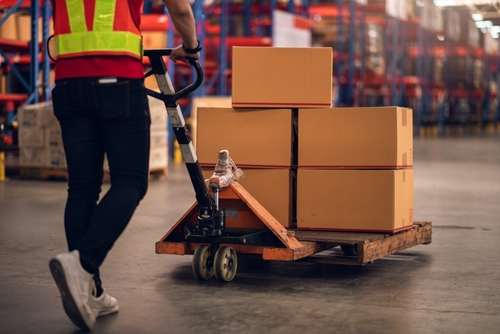
Shipping heavy items to Poland or anywhere in Europe from the United States isn’t a walk in the park. There are rules at each end: American rules for sending things out, and European rules for bringing them in.
Missing any detail often leads to delays or extra fees. The smartest move involves hiring a freight forwarder or a third-party logistics provider (3PL). One team handles everything for you, which means far less paperwork stress and fewer chances for expensive mistakes.
For anyone looking for advice about shipping heavy stuff from the United States to Poland or anywhere in the European Union, you want the facts first.
“As online commerce has grown over the past few years, so has the volume of heavy and hard-to-handle shipments,” according to Commercial Appeal. “Today it is not uncommon to see furniture and large sporting goods items like ping pong tables and kayaks.”
Here are 10 things that matter most when making this trip work. They’re a collection of facts and processes that your consolidated shipper will take care of on your behalf, or at least guide you in the right direction if needed.
The right shipping partner keeps your costs down, helps you avoid hold-ups, and keeps your items safe until they arrive.
U.S. Exporters Must File with the Automated Export System (AES)
Shipping heavy items to Poland valued over $2,500 from the United States means following a strict rule. You have to file details electronically with U.S. Customs and Border Protection. This system is called the Automated Export System.
The freight forwarder usually handles this part, and getting the right number for your product matters a lot. That 10-digit code, called Schedule B, helps track U.S. exports.
You might need to ask what your item is made of, its use, or its size just to get the right code. There are thousands to pick from.
If you pick the wrong number or skip it, you could face big fines. Your shipment might get stopped before it even leaves the country. Mistakes here hit hard and fast.
Tariffs May Apply When Shipping Heavy Items to Poland
Some heavy items, or even machines, from the United States might face extra fees in Europe depending on the year or season. These charges often trace back to old fights between the United States and Europe over big companies like Boeing and Airbus.
Sometimes Europe has slapped on a steep 25 percent duty for certain types of U.S.-made tractors or diggers. These aren't Poland’s usual import taxes — these sit on top.
Double check the European Union’s 10-digit TARIC code for your large item or machine. Even tiny changes in how your equipment is classified can mean big changes in what you pay.
Shippers keep an eye on these rules and update their clients on possible cost surprises. Missing a minor detail can get very expensive.
DDP Terms are Best for a Customer’s Experience
If you’re shipping heavy items to Poland, your consolidated shipper that handles transport, insurance and customs at each stage really matters. Delivered at Place (DAP) or Carriage Paid To (CPT), which are international commercial terms for trade, puts the Value Added Tax (VAT) and duty burden on the buyer.
Imagine the surprise at a 23-percent VAT that you or someone else didn't expect. Shipments can get stuck for days, fees can pile up, and tensions rise.
Delivered Duty Pay (DDP) could be a better option. You pay the bills upfront: shipping, duty, VAT, and insurance. There are no surprises for any customer. They get their goods fast.
Your consolidated shipper will help you land your cost calculation, adding up shipping, insurance, duties, and the Polish VAT beforehand. Prepaying keeps the customs drama at bay.
“In general, EU external import duties are relatively low, especially for basic and raw goods (around 5% on average),” states the U.S. International Trade Administration. “Applicable customs duty for a specific product imported from a selected country of origin can be found on the TARIC website.”
EORI Registration is Mandatory for EU Customs Clearance
An Economic Operators Registration and Identification (EORI) number serves as an identification code for customs processes in the European Union, including Poland. Customs use it to track commercial shipments.
If your commercial invoice lacks this number, customs won’t process your delivery. No EORI means your freight sits stuck at the first EU port or airport — Hamburg or Gdansk for sea, Leipzig for air. The importer in Poland owns this number.
Still, a U.S. exporter must get the EORI from any customer and put it on all required paperwork before shipping. Miss this step and goods might get held, which racks up storage charges fast.
U.S. Export Controls Apply to Dual-Use Items
For shipping heavy items to Poland, know that U.S.-made gear, especially with advanced technology, faces strict export rules. These dual-use items serve business and military needs.
You or your shipper needs to figure out where your item stands by checking the U.S. Interactive Commerce Control List. Every item gets an Export Control Classification Number, called ECCN.
If you see your item and Poland on the list, then you need a license from the Bureau of Industry and Security before shipping. Sending without proper paperwork is risky. You could face criminal charges or end up banned from exporting for good.
Double check every detail before you ship anything.
DIM Can Change Your Cost When Shipping Heavy Items to Poland
Shipping heavy, bulky items to Poland and Europe can get pricey fast. DIM weight (Dimensional Weight Pricing) often sneaks up on you.
Consolidated shipping carriers don’t just care about how much your box weighs — they look at how much space it takes up. Take length, width, and height, multiply them, then divide by 166 for inches or 5,000 if you’re using centimeters.
If that number’s bigger than the actual scale weight, they’ll charge you for it instead. So, don’t just pack for safety. Try to use as little space as possible.
Fill empty spots so things don’t shift. Some folks even strap the item tight to a small pallet. Every inch saved can shave off dollars from your shipping bill.
“It's difficult to estimate how much you'll spend on shipping when there are so many variables at play,” according to Shopify. “Factors that influence shipping costs include shipping zones, delivery speed, parcel value, dimensional weight (DIM), additional services, and duties and taxes.”
Wooden Packaging Must be ISPM 15 Certified
Any solid wood packing sent from the United States to the EU faces strict rules. Every crate, pallet, or piece of dunnage materials must follow Identity Security Posture Management (ISPM) 15 standards. This is something your shipper should be steeped in managing.
The reason? Authorities want to block pests from hitching a ride across borders. The wood must go through a treatment that wipes out bugs.
Two options exist. Heat treatment cooks the wood at 132.8°F (or 56°C) for half an hour. Methyl Bromide is another way, but most of Europe shuns it due to environmental worries.
After treatment, each piece shows a clear International Plant Protection Convention (IPPC) stamp. That mark reveals the logo, “US” to show its origin, a special facility number, and a code for the chosen treatment.
Shipments lacking this proof hit a wall at customs. Those pallets might sit untouched or end up destroyed. Sometimes, it means pricier returns and a big hit to the budget.
Air Freight Versus Sea Freight
How a shipper sends heavy freight affects both price and timing, with implications for customers who are shipping heavy items to Poland. Shipping from the United States to Poland means picking between speed and cost.
Air freight moves your items in under a week. Some U.S. carriers rely on big European airports to move things fast. It's quick, but you pay for that convenience.
Sea freight, which is often economical in the consolidated shipping model, uses huge ships that leave places like New York, NY or Charleston, SC. With this method, the price drops a lot since many containers share the same space. You should expect shipping to take about a month or even longer to reach Poland's ports.
The real question is how urgent your delivery is, or how much value is in the shipment. That decides if paying extra for speed makes sense.
|
Consideration |
Sea Freight (Ocean) |
Air Freight (Express) |
|
Speed (U.S. to Poland) |
Slow (20–40+ days) |
Fast (3–7 days) |
|
Cost Per Kilogram (Kg) |
Lowest (Best for bulk) |
Highest (Premium for speed) |
|
Capacity |
Highest (Full Container Load/FCL or Less-than Container Load/LCL) |
Limited by plane size/capacity |
|
Handling |
Requires specialized port and rail infrastructure |
Faster handling at air cargo terminals |
|
Best For… |
Machinery, bulk materials, non-urgent goods |
High-value, urgent shipments, items with limited shelf-life |
Road Limits, Permits, and Shipping Heavy Items to Poland
Once heavy cargo passes customs at a Polish port, the next step takes it by truck to its final stop.
Poland and the EU place firm rules on axle loads and the overall vehicle weight. Trucks can usually carry up to 40 tons. Bigger cargo, or loads longer than 16.5 meters or wider than 2.55 meters, needs a special permit from Polish authorities before it hits the road.
Extra large shipments, over 60 tons, fall into V or VII categories. These require special trailers and an escort by police or civilian cars depending on the size and heft.
Skipping these steps can lead to big fines. Your shipping partner should always notify you of the rules before moving oversized freight in Poland.
A U.S. Freight Forwarder is Required for Compliance
Shipping heavy items to Poland or elsewhere in Europe from the United States would feel overwhelming if you had to do it all yourself. Export rules are never simple, and export control codes and paperwork can pile up.
Then there are import hurdles like EORI numbers and VAT in Europe. Customs wants everything just right.
Working with a trusted freight forwarder saves time and trouble. They take care of the chain from start to finish. Picking up the goods in the United States, handling required filings, and booking space on ships or planes is all part of the process.
When the shipment lands in Europe, these professionals smooth out customs checks. They know which tariffs apply. They handle road delivery all the way to Poland. If you need special trucks or extra insurance, it's sorted.
That’s less time buried in forms for you, as well as a lower chance of accidental fines. Freight experts really help exporters sleep better at night.
The following are common heavy-item and additional questions that customers ponder with respect to the international consolidated shipping process to Poland and Europe:
- What is the cheapest way to ship heavy items from the United States to Poland? The cheapest option is typically Sea Freight (Ocean), specifically using Less-than-Container Load (LCL) service if your heavy cargo doesn't fill an entire container. While this is the lowest cost per kilogram, be prepared for a long transit time, generally 20 to 40 days. For urgent shipments, the lower cost of ocean freight does not outweigh the penalty of delay, and Air Freight should be utilized.
- Who is responsible for paying Poland's 23-percent VAT? This depends on the Incoterm you agree upon. If you use DAP (Delivered At Place), the recipient in Poland is responsible for the VAT and duties, which often leads to customs clearance issues. If you use DDP (Delivered Duty Paid), the U.S. shipper (you) is responsible for prepaying all charges. DDP is highly recommended to prevent customs holds and provide a professional, seamless experience for your customer.
- What is the EORI number and do I need one? The EORI (Economic Operators Registration and Identification) number is a unique ID used by customs authorities across the entire EU, including Poland. While the EORI number belongs to the importer (the recipient in Poland), the U.S. exporter must ensure this number is present on the Commercial Invoice. If your customer is a business, they should have one; if they are an individual, other documentation may apply, but this should be coordinated through your freight forwarder.
- What happens if my wooden pallet isn't ISPM 15 compliant? Non-compliant wood packaging material (WPM) shipped from the United States will be immediately held at the Polish or first EU port of entry (such as Hamburg or Gdańsk). Customs may require the cargo to be repacked onto a compliant pallet, or, in the worst case, they may destroy the non-compliant packaging, resulting in costly delays, fines, and potential damage to your heavy item.
How Your Shipping Partner Manages Everything
If you’re shipping bulk items to Poland or across Europe, a consolidated shipper and freight forwarder makes life easier. They handle all those rules, forms, and pesky details that cross both continents.
Using one company for everything turns what could have been a paperwork headache into a much smoother, faster job.
|
Compliance Challenge |
Shipper and Forwarder's Solution |
|
U.S. Export Filing |
Handles all mandatory AES Filing for shipments over $2,500 and screens the cargo against U.S. ECCN regulations, securing any necessary export licenses before the item leaves the U.S. port. |
|
Cost and Risk Management |
Negotiates optimal Sea or Air Freight rates, advises on packaging to minimize DIM Weight charges, and coordinates the selection of DDP Incoterms to ensure VAT and duties are prepaid. |
|
EU Import Compliance |
Manages the destination requirements: confirming the importer's EORI number, verifying the EU TARIC Code, ensuring the wood packaging is ISPM 15 Certified, and securing the Overweight Road Permits needed for final delivery in Poland. |
|
Documentation & Safety |
Ensures consistency across the Commercial Invoice, Packing List, and Bill of Lading, reducing the likelihood of customs holds, and arranges mandatory shipping insurance to protect the high value of the heavy freight. |
Poland’s Tech Boom is Your Shipping Solution
Poland’s star keeps rising in Europe’s tech scene. Big names like Google and Amazon keep pouring money in, and job seekers and investors flock to buzzing cities like Warsaw and Kraków.
This boom brings more than headlines. It creates big shifts for U.S. businesses wanting to move products across the Atlantic without breaking the bank. High demand fuels everything. A growing tech economy means constant orders for electronics, parts, and finished goods.
Freight companies are responding to that steady flow, with flights and ships headingout more often. More capacity means prices per shipment drop. As the competition heats up, schedules get tighter and packages arrive in Poland faster than ever before.
Poland offers world-class infrastructure. Its ports run smoothly, and customs clearance works fast and efficiently. Highways and rail lines connect every corner.
Since Poland sits squarely in the middle of Europe, goods flow from the United States, stop in Poland, and then move out across the European Union. There’s no need to ship boxes country by country. Shipments can now come in bulk to one place, get sorted, and reach every customer.
Intel and Amazon didn’t choose Poland by accident, as their supply chains hum along smoothly these days. They need certainty for their high-value goods.
In fact, new U.S. companies just starting out have been piggybacking on this setup. There’s no need to reinvent the wheel, with consolidated shippers and freight forwarders already knowing what tech companies expect.
Customs rules? Already handled by experts. Time-critical deliveries? There’s a plan in place.
“When considering the recipe for a prosperous tech hub, Poland has the most important ingredient in abundance: people,” states European Business Magazine. “Not only are there plenty, but they are highly skilled, motivated and industrious, and are supported by a healthy infrastructure and investment. Poland has all the attributes to be Europe’s tech engine room for years to come.”
Poland is a smart first stop in the European market, and its reputation keeps growing. Shipping to Poland checks all the boxes: fast, cost-effective, reliable. That makes life less stressful for U.S. exporters chasing new customers across the continent.
Poland’s tech success isn’t just good news at home. It opens doors for businesses thousands of miles away.
Polonez America
Polonez America specializes in international shipments from the United States to 43 European countries, including shipping heavy items to Poland. We offer parcel shipment via ocean or air, vehicle shipment, commercial LCL (Less than Container Load) and FCL (Full Container Load) shipping.
Our comprehensive range of services means customers can initiate package or commercial shipments from any of Polonez's authorized shipping outlets within the United States, which are then transported to our headquarters for sorting. Customers can send packages from authorized shipping outlets in the United States or by sending them via UPS, FedEx, or U.S. Postal Service to Polonez America's headquarters in Port Reading, NJ.
Polonez America is your expert in the resettlement process, collaborating with European partners for parcel services, customs, and delivery within Poland and other countries. We earn client trust through integrity and professionalism by delivering the highest quality service at the most competitive price.


Recommended to you

Tips
Jul 9, 2026
The Ultimate Guide to Packing and Shipping Furniture
Relocating abroad is an exciting experience with a certain amount of stress. You will start a new life there, but the practical part can be demanding.
News
Jul 6, 2026
New regulations, same rules: private packages from the U.S. to the EU remain unchanged
In recent days, there has been a lot of information circulating about new customs rules for shipments coming from outside the European Union. As a result, many customers have started to wonder whether sending packages from the USA to Poland and other EU countries is still possible and cost-effective.
News
Jun 29, 2026
TOP 10 Tips for Easy Gifts’ Shipping to Europe from the USA
Give the Perfect Gift, Without the Headache