


Dec 15, 2025
The Physics of Protection in Shipping a Delicate Package
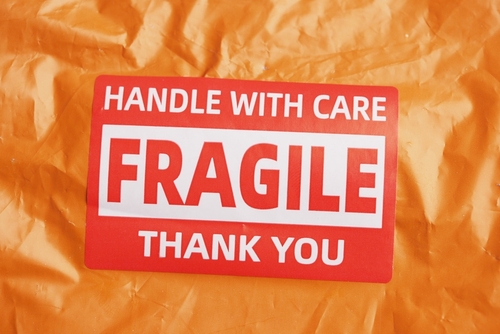
Your first thought before shipping a delicate package to Europe or Poland might be to pick a small parcel service. You might think this solution offers more care, comfort, and attention to details. For example, shipping rare ceramics or an old watch makes most people want one-on-one attention.
Believe it or not, there’s a surprising strength in using group shipping. Your package travels alongside others in a giant container, which actually boosts safety. Less than Container Load (LCL) shipping relies on clever packing and strict safety rules that single-package mail often skips.
The group system protects delicate items better than going solo ever could. Saving money is great, but having mental clarity and freedom from shipping anxiety is even better.
The Architecture Behind Shipping a Delicate Package
To get a sense of what it’s like to ship a delicate package, picture your fragile parcel sitting in the back of a mail truck. Nylon bags and loose bins surround it. Every sudden stop sends items tumbling and clashing.
Now, swap that scene for a steel shipping container. Hard metal walls, strategic stacking — chaos doesn’t stand a chance here.
Consolidators have a strict method, where heavy things always go at the bottom. This simple rule keeps the cargo grounded. With the center of gravity low, the whole box stays steady, even while cranes swing it through the air or the ship sways over waves. The rough journey becomes far less risky for anything breakable.
Imagine a big, heavy motor traveling with a box of delicate glass. In a truck, glass could shatter in minutes. Inside a shipping container, the motor sits fixed on the floor. The glass travels in a padded, upper spot, far from trouble. Every placement is planned with care.
Weight balance isn’t guesswork here since engineers use math to spread mass evenly. They pay close attention to where the weight sits vertically and lengthwise, so nothing shifts. Treating the packed box as a single unit keeps surprises at bay.
The result? Every item, especially the fragile ones, has a far better shot at surviving the journey. These steps turn a rattling truck ride into a smooth, protected voyage.
“Consolidation as a process is used in logistics when goods and shipments are bundled or reorganized,” according to proLogistik. “The aim behind this process is always to make both the transportation and storage of these goods as uniform as possible. This is supposed to save costs and time and increase efficiency.”
It adds: “In transportation, consolidation means combining several individual loads into one groupage load. The shipments of several customers are therefore packed together on one truck and treated as a single shipment.”
Navigating G-Forces and Vibration in Transit
To ship a delicate package, your fragile box or parcel gets special treatment. It usually sits close to the middle of the shipping container, where movement is least intense.
Both the front and back of a ship rock the most in rough seas. Shipping something delicate in those spots would be risky. The front container might bob up and down over 15 meters during a storm.
Consider that type of impact on a fragile vase or an old lamp. A well-placed package near the center stays steady, protected from wild jolts.
Ship vibrations are a different beast since the constant engine rumble can shake things loose inside your package. Screws might work themselves out, making delicate items shift and settle. High-end logistics companies use special tricks for this, putting packages on pallets with extra cushioning at every layer.
This turns the pallet into a shock absorber. Parcel firms carrying thousands of quick deliveries don’t do this since their trucks aren’t gentle. The shipping container itself does a lot of heavy lifting. It keeps your fragile item safe from both big waves and small, constant shakes.
That’s why it arrives looking just as you remember it.
The Science of Dunnage and Shipping a Delicate Package
Packing and shipping delicate packages and goods seems simple until you realize how much moves behind the scenes. Dunnage, like inflatable bags, gets wedged between pallets to keep things steady.
Air pumped inside pushes out, holding boxes tight. Nothing budges if set up right. That's important because even one crate sliding can cause a chain reaction. Everything could tumble, leaving your fragile stuff crushed in a mess.
Crews often add wood or metal bars, locking shipments right to the container’s walls. Smaller items get wrapped onto pallets so even single items ride safely. Shrink-wrap keeps the shape, and forklifts move these packed blocks without anyone dropping or bumping them.
Storms on the sea raise the stakes, which means air pillows won’t cut it for ocean trips. Shippers often go with thick plastic pads or dense foam to cushion against weeks of vibration. Choosing the right material matters since you want those bags to hold their shape from start to finish.
Dunnage does more than just hold things steady. Pallets rest on wood blocks, not the floor. That gap keeps boxes dry, even if moisture collects below.
It means fragile goods shipped in summer heat arrive safe and dry — even after rolling into a cold northern port. Nothing beats opening the container and finding your package just as you packed it.
“Even when product or packaging is not damaged after it tips over, warehouse employees or customers must spend time re-stacking them in order to unload,” states American Journal of Transportation. “That work is not only inconvenient, but time consuming. It can take up to an hour to re-stack one pallet. To re-stack a complete load could take as much as an entire day – a very significant expense.”
The article says safety risk is also a concern when re-stacking, both for employers and the Department of Transportation.
“To address these concerns, the industry has typically turned to a variety of dunnage materials and methods including plywood, matting, strapping and load bars to stabilize and secure truck loads during transportation,” it adds.
Security in Numbers and the Benefits of Surveillance
Shipping delicate packages isn’t just about tough containers. Packing several shipments together adds a layer of security most don’t expect. Many believe putting goods side by side makes theft easier.
That’s not really true in practice. Freight companies wrap group shipments in thick, solid plastic so no one can see what’s inside. Without clear labels or visible contents, there’s little temptation to pick through packages or tamper with them. Your box blends into a wall of packages, making it uninteresting to thieves.
Every shipment gets logged digitally, tied to a one-of-a-kind bolt seal. These seals — heavy steel bars — can’t be cut with regular tools. Each one gets recorded at the start of the trip, then checked at every stop. If someone tries to break in, the record shows it right away.
Some worry their box might vanish among others. Oddly, the opposite happens. Grouping cargo means everyone’s looking out for the whole load. The container stays locked up, removed from the endless chain of hands familiar with ordinary mail delivery. Every time a box gets handled, risks go up.
Here, your package moves less and stays safer, and tracking technology pushes protection further. Packages get scanned by individual barcodes, sometimes even linked to smart sensors. Shippers can watch everything in real time, checking for shocks or temperature swings.
Every box becomes a data point in a living online copy of the container. This virtual mirror, which is called a digital twin, shows where your package is and what’s happening to it. Nothing falls through the cracks.
It’s the closest thing to having eyes on your fragile item the entire way.
The Polish Handoff and Final Delivery
In Poland, the final handoff for shipping a delicate package stands out for its care. Your fragile parcel stayed packed tight with others, not bouncing around like it would in standard parcel networks.
Ordinary shipping means lots of rough handling — dropping, kicking, shoving into bags. Here, your item avoids all that chaos. It rides safely inside a pallet, shielded by strong walls, up until that last stage in a Polish terminal like Gdynia or Gdańsk.
Fewer hands touch your parcel, which means fewer machines batter it. Specialists use heavy gear to keep everything steady, and at the terminal, trained teams open containers carefully. Pallets go straight into bonded warehouses.
Did you know that Polish customs officials do their checks in calm, orderly rooms? Bundled paperwork speeds things up, cutting down wait times and limiting exposure to heat or cold. Your parcel sits safe, wrapped tight, away from rough treatment.
At the end, local couriers take over, glad for the good packaging. The package gets one last careful handoff before it arrives. When you pick this method, you avoid the bumps, drops, and mess of everyday shipping.
It’s a thoughtful approach, one that keeps your fragile gifts, old family items, and special finds in better shape, every step of the way.
Ship a Delicate Package by Comparing Methods
Choosing between air parcel and ocean freight to ship a delicate package involves more than checking price tags. Each method handles packages differently, with air freight offering speed and less exposure to moisture.
Ocean shipments face more handling and longer transit, and fragile items face the risk of bumps at sea. Air means fewer stops and less jostling, but packaging needs changing with each route.
Ocean shipping requires extra waterproofing, and air freight demands cushion from shocks. Both options carry trade-offs.
Shipping experts base their decision on your behalf based on how fragile your items are, how quickly you need them delivered, and how much risk you can accept.
|
Shipping Conditions |
Standard Air Parcel Service |
Consolidated (LCL) Ocean Freight |
|
Handling Method |
High-velocity automated belts; manual tossing |
Palletized; moved via forklift/stabilized equipment |
|
Mechanical Stress |
Frequent “diverter arm” impacts & bag slumping |
Consistent “locked” pressure (Dunnage/Bracing) |
|
Security Protocol |
Individual tracking (highly visible boxes) |
Anonymous, opaque palletization in a sealed container |
|
G-Force Exposure |
Rapid acceleration/deceleration in planes and trucks |
Low-vibration center-loading on specialized vessels |
|
Atmospheric Risk |
Rapid altitude/pressure changes |
Slow, managed climate transitions (Desiccants used) |
|
Structural Defense |
Single-wall cardboard (typically) |
Double-walled units, plus pallet base, plus container ribs |
Most shippers weigh air parcel against ocean freight for more than just price. Speed matters, but so do other factors. Air gets packages to the door fast, while the ocean options take longer but handle bigger loads. Both options have unique risks.
Overall, air shipping faces harsh handling and pressure shifts, and the ocean brings moisture and temperature swings.
Delicate packages need extra care with both, with the right choice depending on your priorities.
Questions Answered: Safely Shipping a Delicate Package
Shipping goods around the world isn't always smooth, but a proactive consolidated shipping service makes sure you meet your shipping goals.
“While we have focused only on the five main peak logistics periods, it’s important to know that high demand may arise in specific industries, creating a ‘peak season’ for that niche,” states Maersk. “For example, agriculture sees a spike during harvest seasons. Understanding these industry-specific trends can help you prepare and adapt your logistics strategies accordingly.”
Just like traffic jams happen during rush hour, the shipping world has its own rush hours where there are more packages than there are trucks, ships, or planes to carry them. You can count on your consolidated shipper to make sure your package is handled with the utmost care and safety.
- Is consolidation really safe for an extremely small delicate package? Yes. The size of the item is less important than the packing method. Because your small delicate package is palletized with other goods, it effectively becomes part of a large, heavy, and stable unit. This "safety in numbers" prevents the package from being crushed under the weight of other loose items, which is a common risk in standard parcel delivery.
- How do consolidators prevent my delicate package from being “crushed”? Consolidators use "stowage plans" that treat the container like a vertical puzzle. Heavy, industrial items are placed on the bottom (floor-loaded) to lower the center of gravity, while a delicate package is "top-loaded" onto the mezzanine levels of the container. This ensures that your fragile goods never bear the weight of the container's heavy base.
- What happens if Polish Customs wants to inspect my delicate package? When a container arrives in a Polish port like Gdynia, it is moved to a "bonded warehouse." Polish customs officials (KAS) can then perform inspections in a secure, climate-controlled environment. Because the paperwork is consolidated under a Master Bill of Lading, the process is often more organized and faster than the individual processing of thousands of small air-mail boxes, reducing the time your delicate package is exposed to handling.
- Does the longer transit time pose a risk when I ship a delicate package? While ocean freight takes longer than air travel, it is actually "gentler" on a delicate package. Air travel involves extreme pressure changes and rapid g-forces during takeoff and landing. Ocean freight is a slow, steady progression. As long as your items are protected with moisture-absorbing desiccants and high-quality dunnage to prevent vibration, the extra time at sea does not increase the risk of physical breakage.
- How can I be sure my delicate package isn't tampered with? Every container is sealed with a serialized, high-security ISO 17712 bolt seal. This seal is checked at every port. Furthermore, the use of opaque pallet wrapping ensures that your delicate package is hidden from view throughout the entire journey, providing a level of stealth security that individual boxes with “Fragile” stickers cannot offer.
Polonez America
Polonez America specializes in international shipments from the United States to 43 European countries, including Poland, so you can ship a delicate package. We offer parcel shipment via ocean or air, vehicle shipment, commercial LCL (Less than Container Load) and FCL (Full Container Load) shipping.
Our comprehensive range of services means customers can initiate package or commercial shipments from any of Polonez's authorized shipping outlets within the United States, which are then transported to our headquarters for sorting. Customers can send packages from authorized shipping outlets in the United States or by sending them via UPS, FedEx, or U.S. Postal Service to Polonez America's headquarters in Port Reading, NJ.
Polonez America is your expert in the resettlement process, collaborating with European partners for parcel services, customs, and delivery within Poland and other countries. We earn client trust through integrity and professionalism by delivering the highest quality service at the most competitive price.


Recommended to you

Tips
Jul 9, 2026
The Ultimate Guide to Packing and Shipping Furniture
Relocating abroad is an exciting experience with a certain amount of stress. You will start a new life there, but the practical part can be demanding.
News
Jul 6, 2026
New regulations, same rules: private packages from the U.S. to the EU remain unchanged
In recent days, there has been a lot of information circulating about new customs rules for shipments coming from outside the European Union. As a result, many customers have started to wonder whether sending packages from the USA to Poland and other EU countries is still possible and cost-effective.
News
Jun 29, 2026
TOP 10 Tips for Easy Gifts’ Shipping to Europe from the USA
Give the Perfect Gift, Without the Headache